

A syringe is a medical device used for injecting liquids into the body or withdrawing fluids from it. It consists of a hollow needle attached to a cylindrical barrel, which is closed at one end and open at the other. The open end of the barrel is fitted with a plunger that can be moved back and forth inside the barrel. Syringes come in various sizes and types, depending on the purpose for which they are intended. They are commonly used in medical procedures such as administering medications, taking blood samples, and giving injections. Syringes must be disposed of properly after use to prevent the spread of infections and diseases.
Why Choose Us
High quality
Our products are manufactured or executed to a very high standard, using the finest materials and manufacturing processes.
Advanced equipment
A machine, tool or instrument designed with advanced technology and functionality to perform highly specific tasks with greater precision, efficiency and reliability.
Quality control
We have built a professional quality control team to accurately inspect every raw material and every production process.
Professional team
Our professional team collaborates and communicates effectively with each other, and is dedicated to delivering high quality results. We are capable of handling complex challenges and projects that require our specialized expertise and experience.
Customized services
We understand that each customer has unique manufacturing needs. That’s why we offer customization options to cater to your specific requirements.
24H online service
We try and respond to all concerns within 24 hours and our teams are always at your disposal in case of any emergencies.


Advantages of Syringe
Accuracy
Syringes are designed to deliver an accurate dose of medication, which is essential for ensuring safe and effective treatment. The use of a syringe eliminates the risk of errors caused by manual calculations or estimations.
Sterility
Syringes are typically packaged in a sterile environment to prevent contamination and infection. This is particularly important for injections that are administered intravenously or into the bloodstream.
Convenience
Syringes are easy to use and can be quickly and easily disposed of after use. They are also compact and lightweight, which makes them ideal for use in a variety of settings, including hospitals, clinics, and emergency situations.
Versatility
Syringes come in various sizes and types, which makes them suitable for a wide range of applications. For example, insulin syringes are designed specifically for administering insulin to patients with diabetes, while butterfly syringes are used for taking blood samples from fragile veins.
Minimizes pain
The use of a syringe can minimize the amount of pain experienced by patients during injections. The sharp needle of the syringe allows for quick penetration of the skin, reducing the amount of time the patient feels the injection.
Safe
When used correctly, syringes are safe and pose little risk of complications. However, it is important to follow proper protocols and procedures when using a syringe to minimize the risk of adverse events, such as infections or allergic reactions.

Types of Syringe
Hypodermic syringes
These are the most common type of syringes used in healthcare settings. They are designed for subcutaneous, intramuscular, and intravenous injections. Hypodermic syringes typically have a sharp needle attached to a cylindrical barrel, which is closed at one end and open at the other. The open end of the barrel is fitted with a plunger that can be moved back and forth inside the barrel.
Insulin syringes
These syringes are specifically designed for administering insulin to patients with diabetes. They are smaller than hypodermic syringes and typically have a shorter and thinner needle. Insulin syringes are also designed to be more accurate, allowing for precise dosing of insulin.
Butterfly syringes
These syringes are designed for taking blood samples from fragile veins. They have a smaller needle than hypodermic syringes and are attached to a small pump that can be used to create a vacuum in the barrel, allowing for easier blood draw.
Irrigation syringes
These syringes are designed for flushing or cleaning wounds, such as those found on the eyes or ears. They typically have a longer and wider barrel than other types of syringes and are often equipped with a special tip that can be used to direct the flow of fluid.
Spinal needle syringes
These syringes are used in spinal taps, also known as lumbar punctures. They have a longer and thinner needle than other types of syringes and are designed to penetrate the tough layer of tissue surrounding the spinal cord.
Winged infusion syringes
These syringes are designed for administering medications intravenously over a prolonged period of time. They have a small wing attached to the side of the barrel, which can be used to stabilize the syringe during infusion.
Tuberculin syringes
These syringes are used for administering tuberculosis skin tests. They have a very fine needle and are designed to deliver a small amount of fluid accurately.
Application of Syringe
Syringes are commonly used for administering medications, such as insulin, antibiotics, and vaccines. The medication is loaded into the syringe and then injected into the patient's body. This method of administering medications allows for precise dosing and ensures that the medication is delivered directly to the intended site of action.
Syringes are also commonly used for taking blood samples. A needle attached to a syringe is inserted into a vein, and the plunger is pulled to create a vacuum that draws blood into the barrel of the syringe. Blood samples obtained using syringes can be used for a variety of purposes, such as testing for disease markers, monitoring vital signs, and performing laboratory tests.
Syringes are widely used for giving injections, which involve delivering a dose of medication or other substance directly into the body. Injections can be given intravenously, intramuscularly, or subcutaneously, depending on the specific medication and the intended site of action.
Syringes can also be used for flushing or cleaning wounds, such as those found on the eyes or ears. A sterile solution, such as saline, is loaded into the syringe and then injected into the wound to clean it and promote healing.
Syringes are used in spinal taps, also known as lumbar punctures. A needle attached to a syringe is inserted into the spinal canal to collect cerebrospinal fluid for testing.
Syringes can be used to administer medications intravenously over a prolonged period of time. A medication is loaded into a syringe, which is then attached to an intravenous catheter. The medication is delivered slowly over time, allowing for prolonged therapy.
Syringes are used to administer tuberculosis skin tests. A very fine needle attached to a syringe is used to deliver a small amount of fluid under the skin. The skin is then checked for a reaction, which can indicate whether the patient has been exposed to tuberculosis.
How to Store Syringe

Keep syringes in a dry and clean environment
Syringes should be stored in a dry and clean environment to prevent contamination and damage. They should be kept away from moisture, dust, and other environmental factors that can affect their quality.

Store syringes in a dark and cool place
Syringes should be stored in a dark and cool place to prevent degradation and damage. Exposure to light and heat can cause the materials used in manufacturing syringes to degrade, affecting their performance and accuracy. Therefore, it is recommended to store syringes in a dark cabinet or drawer away from direct sunlight and other sources of heat.

Keep syringes away from chemicals
Syringes should be kept away from chemicals that can damage them. Chemicals such as solvents, disinfectants, and other harsh chemicals can cause the materials used in manufacturing syringes to break down, affecting their accuracy and performance.

Label syringes properly
It is essential to label syringes properly to avoid confusion and errors. Syringes should be labeled with information such as the type of medication, the dose, the expiration date, and any special instructions. This information should be written on the packaging or the syringe itself using a permanent marker.

Store syringes in their original packaging
Syringes should be stored in their original packaging to protect them from damage and maintain their sterility. The packaging provides a barrier against contamination and prevents the syringes from coming into contact with harmful substances.

Keep syringes out of reach of children and pets
Syringes should be kept out of reach of children and pets to prevent accidental injury and ingestion. They should be stored in a high and secure place, away from toys, furniture, and other objects that children and pets can climb onto.

Check the expiration date
It is essential to check the expiration date of syringes before using them. Using expired syringes can lead to errors in dosing, inaccurate results, and potential harm to patients. Therefore, it is recommended to discard expired syringes and replace them with new ones.
What Are the Different Parts of a Syringe?
Plunger: The plunger is the part of the syringe that is used to create a vacuum or pressure to draw fluid into or out of the barrel. It is a long cylindrical rod that fits tightly within the barrel and can be moved back and forth to control the flow of fluid.
Barrel: The barrel is the cylindrical part of the syringe that holds the fluid to be injected or drawn out. It is typically made of glass or plastic and has markings on it to indicate the amount of fluid within. The barrel is open at one end to allow for the attachment of a needle or other injection device.
Needle: The needle is a sharp, hollow tube that is attached to the end of the syringe barrel. It is used to inject fluid into the body or draw fluid out of the body. Needles come in various sizes and lengths, depending on the intended use and the patient's needs.
Tip: The tip of the syringe is the end of the needle that is inserted into the patient's body. It is typically made of plastic and is designed to minimize pain and discomfort for the patient. The tip may be attached to a needle shield or cap to protect the needle and prevent accidental needle sticks.
Hub: The hub is the part of the syringe that connects the needle to the barrel. It is typically made of plastic and provides a secure attachment between the two components. The hub may have a threaded design to allow for secure attachment and removal of the needle.
Lock ring: The lock ring is a device used to secure the needle to the syringe hub. It prevents the needle from becoming dislodged during use and ensures that the needle remains securely attached to the syringe.
Flange: The flange is a ring-shaped part of the syringe that is located near the plunger. It provides a place for the user to grip the syringe securely during use. The flange may be made of plastic or other materials and can help reduce hand fatigue during prolonged use.
How Do I Choose the Right Syringe Size?

01.Purpose of the syringe
02.Age and size of the patient
03.Medication type and volume
04.Personal comfort and experience
05.Availability and cost
06.Consultation with a medical professional
Reusing syringes can lead to cross-contamination, infection, and the transmission of blood-borne pathogens such as HIV, hepatitis B, and hepatitis C. In addition, reusing syringes may cause damage to the needle, which can result in inaccurate dosing and increased discomfort or injury for the patient. Reusing syringes also poses a risk to healthcare workers who may come into contact with contaminated syringes. Needle stick injuries can occur, which can expose healthcare workers to blood-borne pathogens and other infections. Despite the risks associated with reusing syringes, there may be situations where reuse is necessary, such as in resource-limited settings where medical supplies are limited. In these cases, proper disinfection and sterilization techniques should be used to minimize the risk of infection and cross-contamination. To minimize the risk of reusing syringes, healthcare facilities should have protocols in place to ensure that syringes are disposed of properly after a single use. Patients should also be educated on the importance of using new, unopened syringes for each injection or medication administration.

How Do I Properly Dispose of Used Syringes?
Never reuse syringes
Reusing syringes can lead to the spread of infectious diseases, including HIV, hepatitis B, and hepatitis C. It is important to use a new, unopened syringe for each injection or medication administration.
Do not bend, break, or recap needles
Bending or breaking needles can cause injury and lead to the spread of infectious diseases. Recapping needles can also lead to accidental needle sticks and exposure to blood-borne pathogens.
Use a puncture-resistant container
Used syringes should be placed in a puncture-resistant container, such as a sharps container, to prevent accidental needle sticks and exposure to blood-borne pathogens.
Label the container
The container should be labeled with the words "biohazard" and "sharps" to indicate that it contains used syringes and other sharps waste.
Properly dispose of the container
Used sharps containers should be disposed of according to local regulations. In some areas, used sharps containers can be disposed of in the regular trash, while in others, they must be disposed of through a specialized waste disposal service.
Educate patients
Patients should be educated on the importance of proper disposal of used syringes and should be provided with instructions on how to dispose of used syringes safely.
Yes, syringes can be used for intravenous (IV) injections. Syringes are a critical component of IV therapy, which involves the delivery of medications and fluids directly into a patient's vein. IV therapy can be used to administer a wide range of medications, including antibiotics, pain relievers, and chemotherapy drugs, as well as to deliver fluids, electrolytes, and nutrients. Syringes used for IV injections are typically designed with a sterile, disposable needle attached to a barrel that can be filled with medication or fluid. The needle is inserted into the patient's vein, and the medication or fluid is delivered through the needle and into the vein. When using a syringe for IV injection, it is important to follow proper aseptic technique to minimize the risk of infection or contamination. This includes wearing gloves, cleaning the injection site with an antiseptic solution, and using a new, sterile syringe and needle for each injection. Syringes come in a variety of sizes and designs, and the appropriate size and type of syringe will depend on the specific medication or fluid being administered, as well as the patient's medical needs and condition. For example, some medications may require a larger volume or a longer needle for effective delivery, while others may require a smaller volume or a shorter needle. In addition to their use in IV injections, syringes are also commonly used for other medical procedures, such as vaccination and blood collection. Proper handling and disposal of used syringes are essential for preventing the spread of infectious diseases and protecting public health.


Yes, syringes are commonly used for drawing blood, also known as phlebotomy. In fact, syringes with needles are specifically designed for this purpose and are an essential tool for medical professionals who perform blood tests. When it comes to drawing blood, the most common type of syringe used is the vacuum-assisted syringe. These syringes have a pre-measured amount of suction, which helps to draw the blood into the syringe. This makes it easier for the healthcare worker to collect the required amount of blood without causing undue discomfort to the patient. The process of drawing blood using a syringe typically involves the healthcare worker first identifying a suitable vein in the patient's arm. Once the vein is located, the healthcare worker will clean the area with an antiseptic solution to minimize the risk of infection. The healthcare worker will then insert the needle into the vein and attach the syringe to the needle. Once the needle is in place and the syringe is attached, the healthcare worker will pull back on the plunger to create a vacuum that draws blood into the syringe. Syringes used for drawing blood are typically made of plastic or glass, and the needles are usually made of stainless steel. The size of the syringe and needle will depend on the amount of blood needed and the patient's medical needs and condition. It is important to note that the proper disposal of used syringes is essential for preventing the spread of infectious diseases and protecting public health. Used syringes should be disposed of in puncture-resistant containers that are labeled with the words "biohazard" and "sharps."
Yes, syringes are commonly used for administering insulin to patients with diabetes. Insulin is a hormone that helps regulate blood sugar levels in the body, and it is typically delivered via injection using a syringe or insulin pump. When it comes to administering insulin using a syringe, there are several important factors to consider. First, the healthcare provider will determine the appropriate dose of insulin based on the patient's medical needs and blood sugar levels. The insulin will be delivered using a syringe that is specifically designed for injecting medication, such as insulin. Second, it is important to follow proper aseptic technique when administering insulin using a syringe. This includes wearing gloves, cleaning the injection site with an antiseptic solution, and using a new, sterile syringe and needle for each injection. This helps to minimize the risk of infection or contamination and ensures that the insulin is delivered safely and effectively. Third, patients who require insulin injections should be educated on the proper use of syringes to ensure safe and accurate administration of their medication. This includes instructions on how to properly fill the syringe, how to insert the needle into the skin, and how to administer the correct dose of insulin. Patients should also be taught how to dispose of used syringes properly to minimize the risk of infectious disease transmission. Syringes used for administering insulin come in a variety of sizes and designs, and the appropriate size and type of syringe will depend on the specific medication being administered, as well as the patient's medical needs and condition. For example, some patients may require a larger syringe to deliver a higher dose of insulin, while others may require a smaller syringe for a lower dose.

Our factory
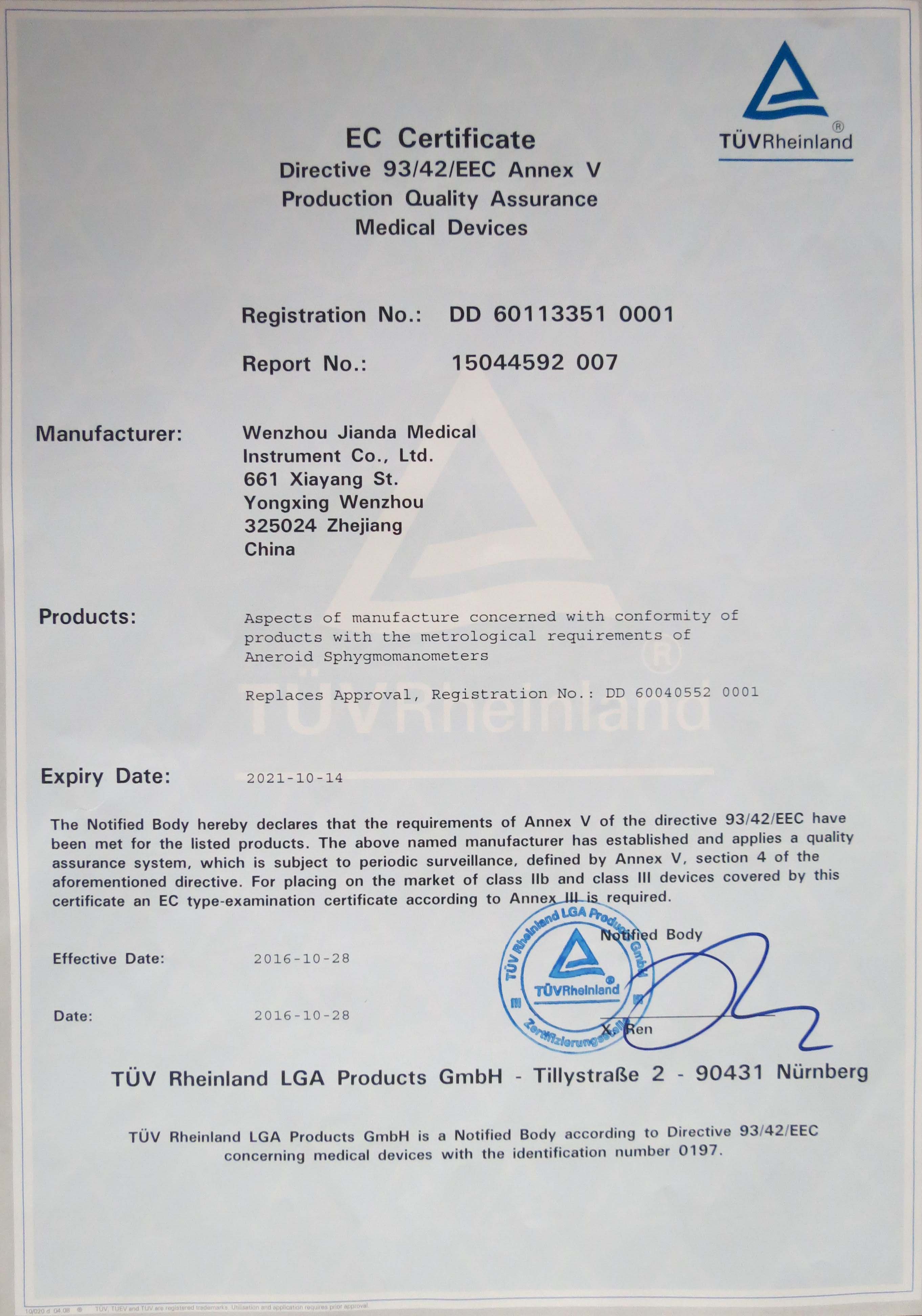
Wenzhou Jianda Medical Instrument Co.,Ltd. is a manufacturer and supplier of aneroid sphygmomanometer, stethoscope and other medical instruments such as digital blood pressure monitor,digital thermometer, medical device accessories. We produce more than 500,000 sets of sphygmomanometers and stethoscopes every year and our products have been exported to USA, EEC and many other countries.
Our Certificate

FAQ
Q: What are the different parts of a syringe?
Q: What are the different types of syringes?
Q: What is the purpose of a syringe?
Q: How do I choose the right syringe size?
Q: How do I properly dispose of used syringes?
Q: Can syringes be recycled?
Q: Can I administer my own injections with a syringe?
Q: Can syringes be used for oral medication administration?
Q: Can syringes be used for intravenous (IV) injections?
Q: Can syringes be used for intramuscular (IM) injections?
Q: Can syringes be used for subcutaneous (SC) injections?
Q: Can syringes be used for drawing blood?
Q: Can syringes be used for administering vaccines?
Q: Can syringes be used for administering insulin?
Q: Can syringes be used for administering medications to children?
Q: Can syringes be used for administering medications to pets?
Q: Can syringes be used for administering contrast agents for medical imaging?
Q: Can syringes be used for administering fertility medications?
Q: Can syringes be used for administering emergency medications?
Q: Can syringes be used for administering intrathecal medications?